Why Logos Are Getting Simpler?

The world of branding is witnessing a metamorphosis. Ornate logos and overwrought packaging are fading into the background, replaced by a minimalist aesthetic. Brands are embracing simplicity, focusing on clean lines, bold colors, and clear communication. This trend transcends mere aesthetics; it’s a strategic move with significant benefits, shaping brand identity across all industries.

The Urge for Simplicity: A Multifaceted Force

Several factors fuel the rise of simplicity in branding:

  • Attention Deficit in an Information Age: Consumers are bombarded with information on a daily basis. Simple designs act as visual filters, cutting through the noise and capturing attention. A clean logo is easier to process and remember, leaving a lasting impression amidst the constant barrage of stimuli.
  • Building Brand Recognition Through Distillation: Simplicity fosters brand recognition. Think of Apple’s bitten apple or Coca-Cola’s Spencerian script. These stripped-down designs are instantly recognizable without needing words. By focusing on core elements, brands create visual cues that resonate with consumers across cultures and languages.
  • Adaptability Across the Digital Frontier: The digital age demands flexibility. Brands need their logos and designs to look good on everything from massive billboards to tiny smartphone screens. Simple designs are easier to scale and adapt to diverse platforms, ensuring consistent brand presentation across all touchpoints.
  • Evolution, Not Erasure: Refining the Brand Essence Embracing simplicity doesn’t imply abandoning brand identity; it’s about refining a brand’s core essence. Consider the example of Lacoste. The iconic crocodile logo, originally adorned with the brand name, now stands alone. The crocodile has become synonymous with the brand, a testament to the power of a well-established brand identity.
  • Aligning with Modern Values: Simplicity reflects a shift in consumer preferences. Today’s consumers value authenticity, transparency, and efficiency. A clean, uncluttered design communicates these values visually, building trust and rapport with the target audience.

Beyond Logos: A Holistic Embrace of Simplicity

The trend towards simplicity extends far beyond logos. Brands are simplifying their entire visual language, from packaging and website design to marketing materials and social media presence. This holistic approach creates a cohesive brand identity that resonates with consumers on a deeper level.

  • Clean Packaging that Speaks Volumes: Gone are the days of busy packaging designs with excessive text and imagery. Today’s packaging trends favor clean lines, bold colors, and a focus on the product itself. Think of the minimalist packaging of MUJI products or the sleek, single-color bottles of Evian water. This approach allows the product to shine, while still maintaining a strong brand presence through color or subtle design elements.
  • User-Friendly Websites: A Navigation Oasis Simplicity reigns supreme in website design. Uncluttered layouts, clear navigation with intuitive menus, and easy-to-read fonts all contribute to a positive user experience. Visitors should be able to find the information they need quickly and easily, without getting bogged down by visual clutter. Think of Google’s clean homepage or the minimalist design of Airbnb’s website.
  • Straightforward Communication: Cutting Through the Jargon Marketing materials and social media posts are also embracing simplicity. Brands are opting for clear, concise messaging and high-quality visuals to communicate their value proposition. Gone are the days of long-winded marketing copy and overly complex visuals. Today’s consumers demand straightforward communication that resonates with them on an emotional level. Think of Dollar Shave Club’s humorous and direct marketing videos or Patagonia’s nature-centric social media posts.

Case Studies: Brands Leading the Simplification Charge

Several brands have demonstrably embraced the power of simplicity:

  • Levi’s: The iconic denim brand has simplified its logo over the years, removing unnecessary elements and focusing on the recognizable “Levi’s” typeface. This allows the brand to maintain its heritage while remaining relevant in a modern context.
  • Starbucks: The coffee giant has undergone a logo evolution, removing the outer coffee ring and streamlining the mermaid design. This creates a cleaner and more versatile logo that translates well across various marketing materials.
  • M&M’s: The colorful candy brand has simplified its character designs, giving them a cleaner and more modern look. This allows the focus to remain on the product itself, while still retaining the brand’s playful personality.

The Power of Subtraction: Embracing the Minimalist Future

The trend towards simplicity in brand design is not merely a passing fad; it’s a fundamental shift in how brands connect with consumers. By embracing a minimalist approach, brands can create a more memorable, adaptable, and authentic brand identity that resonates with today’s audience. In a world overflowing with noise, simplicity is the new power play. Here are some additional considerations and potential future implications of this trend:

The Rise of User-Generated Content and the Simplified Brand Canvas

Social media and the rise of user-generated content (UGC) play a significant role in the trend towards simplicity. Brands are increasingly relying on consumers to tell their stories and create content. A simple brand identity acts as a blank canvas for UGC, allowing consumers to personalize their interactions with the brand and express their own unique style. Think of GoPro’s minimalist logo, which seamlessly integrates into user-generated action videos.

The Challenge of Differentiation in a Sea of Simplicity

While simplicity offers numerous benefits, it also presents a challenge: how to stand out in a sea of similar minimalist designs? Brands need to find ways to differentiate themselves beyond just aesthetics. This can be achieved through:

  • A Strong Brand Story: A compelling brand story that resonates with consumers’ values and emotions can help a brand stand out in a simplified visual landscape. Think of Patagonia’s commitment to environmental activism or Dove’s focus on body positivity.
  • Exceptional Customer Experience: In a world of simple logos and packaging, the customer experience becomes a key differentiator. Brands that provide exceptional customer service, build personalized connections, and offer unique value propositions will win over consumers.
  • Focus on Innovation and Functionality: Innovation and a focus on functionality can also set a brand apart. Think of Dyson’s sleek and technologically advanced vacuum cleaners or Tesla’s minimalist electric vehicles.

The Future of Branding: A Symbiotic Relationship

The future of branding is likely to see a symbiotic relationship between brands and consumers. Brands will continue to simplify their visual language, while consumers will play a more active role in co-creating brand experiences through UGC. This collaborative approach will require brands to be more transparent, authentic, and adaptable to consumer preferences.

Potential Challenges on the Horizon

While simplicity offers numerous advantages, there are potential drawbacks to consider:

  • Loss of Brand Heritage: Oversimplification can risk erasing a brand’s rich history and heritage. Brands need to strike a balance between embracing simplicity and maintaining their unique identity.
  • Genericization: A sea of minimalist logos could lead to a sense of genericization, making it harder for brands to stand out. This underscores the importance of a strong brand story and a focus on differentiation.
  • The Commoditization of Design: The widespread adoption of minimalist design principles could lead to a commoditization of design itself. Brands will need to find ways to use simplicity creatively and strategically to maintain a competitive edge.

Conclusion: A Simpler Future, Richer Connections

The rise of simplicity in brand design is a reflection of our fast-paced, information-saturated world. By embracing this trend, brands can create a more memorable, adaptable, and authentic identity that resonates with today’s audience. However, it’s crucial to remember that simplicity is a tool, not a magic bullet. Brands that combine a minimalist aesthetic with a compelling brand story, exceptional customer experiences, and a focus on innovation will be well-positioned to thrive in the simpler future of branding.

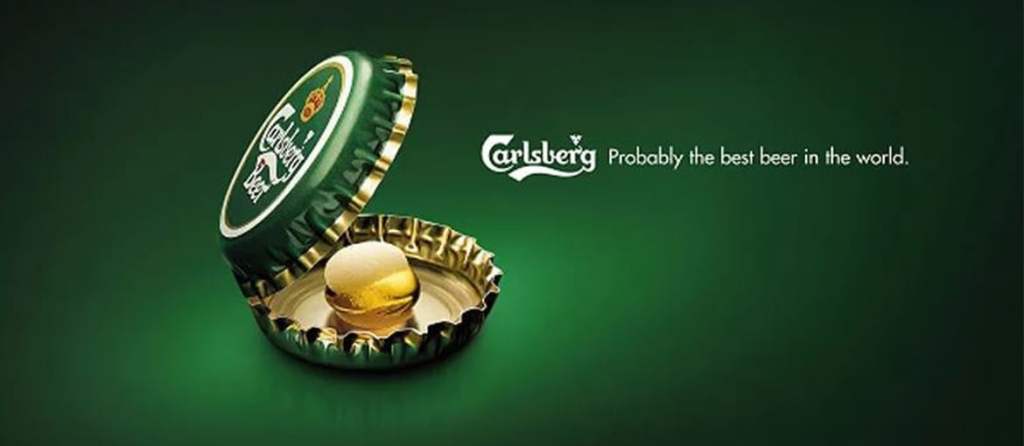
Hyperboles Unleashed: Elevating Marketing Messages with Exaggerated Flair

In the dynamic realm of marketing, where creativity reigns supreme, one linguistic tool stands out like a beacon of attention: the hyperbole. These exaggerated statements inject campaigns with vigor, painting products and services in the most vibrant of colors. Let’s delve into the world of hyperboles and explore how they transform ordinary marketing into extraordinary brand narratives.

Crafting Compelling Narratives: The Art of Exaggeration

Hyperboles breathe life into brand stories, transforming mundane features into extraordinary experiences. Take the legendary slogan of a renowned coffeehouse chain: “The best coffee on Earth.” While it’s unlikely their brew is universally acclaimed, this hyperbolic claim infuses their brand with an aura of excellence, enticing consumers with the promise of unparalleled coffee bliss.

Establishing Emotional Connections: Stirring Hearts with Exaggeration

Emotions lie at the heart of consumer decision-making, and hyperboles know exactly how to pull on those heartstrings. Consider the marketing campaign of a luxury automobile brand, boasting their latest model as “the epitome of elegance and performance.” Though it may not transport drivers to the pinnacle of luxury, this hyperbolic imagery taps into consumers’ desires for sophistication and status, forging a deep emotional connection with the brand.

Creating Memorable Brand Identities: Standing Out in a Sea of Sameness

In a crowded marketplace, brands must fight tooth and nail for attention. Hyperboles serve as a secret weapon, ensuring brands leave an indelible mark on consumers’ minds. Picture the advertising tagline of a household cleaning product: “Banishes dirt in a single swipe!” While no cleaner is truly omnipotent, this hyperbolic claim ensures the brand is synonymous with efficacy in consumers’ eyes, making it the go-to choice for tackling tough stains.

Striking a Balance: The Fine Line Between Exaggeration and Authenticity

Yet, in the pursuit of attention-grabbing hyperboles, brands must tread carefully to avoid overstepping the bounds of credibility. A misstep could lead to consumer backlash and irreparable damage to brand trust. Thus, while hyperboles can elevate marketing messages to new heights, they must always remain grounded in truth and authenticity.

Conclusion: Embracing the Hyperbolic Revolution

In the grand tapestry of marketing, hyperboles emerge as the thread that weaves compelling narratives, forges emotional connections, and carves out memorable brand identities. From coffeehouses to luxury automobiles to household cleaners, hyperboles infuse marketing campaigns with a dash of exaggeration, capturing hearts and minds with their irresistible allure.

So, as brands navigate the ever-changing landscape of consumer preferences and behaviors, let them not shy away from the power of hyperbole. Embrace the exaggeration, harness its potency, but always remember: authenticity is the cornerstone upon which lasting brand success is built.

What is User Experience (UX) and why it is important for your Website?

One of the pillars to your website getting a good performance is UX, or User Experience. The design and usability of web pages are essential so that customers can have a good experience.
Providing a poor experience can result in frustrated customers, a bad perception of the business brand, and increased costs, so, everyone that looks to build a digital project needs to be aware to develop a good UX design.

What is UX?

UX acronym stands for User Experience, what the users feel when interacting with a service, a system, or a product. This process will design a strategy that prioritizes a good experience for those who interact with the software, from the study of their needs, their behavior, and their motivations.
The objective of UX is to design an interface with an interaction that is as pleasant as possible, designing platforms and points of contact that allow the user to interpret easily, more intuitively, and simply, on their own.

Why worry about your website’s UX?

A visitor is not willing to spend more than 59 seconds on a website, being necessary to turn your website faster possible in terms of server processing and layout disposition.

Design a website with a good experience will provide your company:

  • Retain visitors

A more attractive and easy-to-navigate website invites the user to stay there, either with interesting content or by offering other pages to browse. Thus, the time spent on the site is increased, guiding the user to discover other available content.

  • Increases the perceived value of the product

Provide an experience that, after a purchase, arouses a positive feeling in the user, accompanied by a “Wow, this purchase was worth it!” its added value, which goes beyond its monetary cost.

  • Loyalty and referrals

Promoting an incredible experience for your consumer means making this customer someone loyal to the brand, who, when they feel the need for a new purchase, will have kept in their memory the pleasant feeling that your company left in their interaction, making a recurring purchase.

In addition, it will create an advocate for your brand, who may be guided to refer you to friends, family, and acquaintances.

  • Increase in conversions

The decision to make a purchase, sign up, or contact, is built while the visitor walks through your website, so if the user feels comfortable browsing, the probability for a conversion action increases.

So, having good navigation between products, knowing where and when to display forms, and newsletter subscriptions, are more likely to convert.

What should I consider for a good UX?

  1. The loading speed

Waiting more than 4 seconds for the page to load can represent the loss of countless sales and other conversions, so it the importance of worrying about the loading time of your website.
The tip is to opt for a minimalist layout, without many images, and replace, for example, a jpeg file with a webp, which can reduce the image size by up to 35% without losing quality.

  1. The menu

Your site’s menu also directly impacts performance and user experience. Take into account whether the links to the pages are clearly organized or have broken links.
Another element is to verify that the accessibility of the menu on a smartphone is as good as on a computer, especially considering that a large part of access is currently via cell phones.

  1. Search bar

The search bar is an essential tool for a good user experience and should be positioned in places that facilitate user access and interaction.

What steps to follow to develop UX?

The first step in building UX is collecting data, knowing what the likes, needs, desires, and limitations of the visitors are. Knowing your audience’s persona and the market makes it easier to measure what your user is looking for.

2. Create Your Audience Persona 

After having knowledge of the audience and their needs, it is time to move on to the creation of the persona, which is the representation of the entire target audience of the company, developing a project that can reach several people that fit the same characteristics.

3. Designing the UX 

The next step is to create a sitemap to understand the best layout and layout of the contents so that the flow of user interaction on the site is the best possible.
Get in mind that we are driven to make decisions according to our feelings and emotions, the UX must awaken the user’s feelings while browsing, these emotions are based on affective, sensory, experiential, meaningful, and valuable elements of human-computer interaction (HCI).

4. Usability testing 

The fourth step consists of verifying the prototype of the project, seeking to identify the number of errors that the user may make during the test, and measuring customer satisfaction through user feedback, A/B tests, heat maps, and other tools.

5. Validation 

The last step is to analyze the results. After launching the prototype on the market, the site’s indicators must be monitored, in order to intervene in points where usability can be improved.

Zoom out: There is no absolute guide of steps to develop the UX, the phases can be different according to each designer or team, which according to the needs of your project, can follow different steps.

UX examples from very famous companies

Amazon 

Amazon is a marketplace that offers numerous products for the most diverse consumer needs, and precisely because of the large number of products and segments, it becomes a challenge to create a platform with a structure that does not make the user get lost in the process of purchase.
Using the UX, Amazon bet on a simple Home Page, focusing on the subdivision of categories and an easy-to-interact search field, so that the user can easily search. With this structure, Amazon made it possible for your user to be on the purchase page of the product you want in just 3 clicks.
Another innovation was the feedback and review field, which made it possible for buyers to publicly share their vision of the product, influencing the purchase of other users.

TripAdvisor 

TripAdvisor is one of the most famous travel reviews and price comparison sites, which has also done a great job focusing on its user experience.
Tripadvisor focused on making a Home Page focused on just a single action, where the user enters the desired destination in a highlighted section right at the beginning with the call “Where to?”.
Quickly, the user is already on a page with offers of hotels, restaurants, and experiences that he can do in his destination, being ranked according to the best possible offers, having the functionality to filter his search to obtain results with greater precision.

Why is UX essential for Marketing?

It is very common to see companies treating UX and Marketing as two different sectors, but the truth is that both must always be integrated, combining and structuring strategies together, because UX is embedded in the product or service you want to sell.

Providing your customers with a delightful emotional experience during their purchase process, making them quickly find your product and its benefits makes it more conducive to purchase, referral, and word-of-mouth marketing.

How can Investor Relations be the most important “Consultant” for your company?

You have probably already heard about incorporated or “Inc.” companies like Amazon, Meta, and Tesla, which are known as companies divided by shares, which enable the negotiation of securities depicting portions traded on the market without the need for a deed of ownership. Open the capital, is one of most better strategies to get investments for business growth.

Most of cases, the companies that turn incorporated, already have a great consolidation in the market, so, come with a great executives team, software, and structuring in each sector, mainly in the R&D (Research and development) department, which is responsible for gather data on the market, customers, technologies, innovation, and new trends, to make the business even more prominence in their niches.

So, based on data that was developed by great professionals and software, the Inc companies design the best path according to the analysis made.

And now, the big insight.

How those companies are inc and have open capital, by law, they are obligate to the income statement publicly the financial indicators, communicate what strategies worked well, provide an outlook about the market and announce the products and services that will be launch, this is entitled as Investor Relations.

This report to shareholders on the business plan, cash flow, and announcements happen through an event called Earnings Call, which commonly occurs in an interval yearly, semiannual, or quarterly and usually is presented by the CEO or CFO of the company. Now, know how you can collect good fruits from this event for your business.

Understanding that the analysis was made by great executives, who have the Skin in the game, who knows the branch, and have data that was gathered by the R&D department, you as a small or medium business owner can use their team’s resources and efforts to apply a lot of the same strategies that are presented publicly, inside of your business, following the most promising trends in the market.

Examples of big companies that followed trends

  • Instagram

Maybe Instagram is the most famous case of the success of companies that reproduce competitors’ trends well, for example, in 2013 Snapchat became very popular with the verticals videos that lasted 24 hours, turning it a threat to Instagram in the world of social media..

Thus, did not take too long for Meta’s company to adapt to the success that was happing in the neighbor app, creating the Instagram Stories in the same format, and complementing the feed posts.

Recently, another content format that turned into a success was the TikTok videos, which have the characteristic of being shorts vertical videos, added with some edit resources (and this time, it doesn´t just last for 24 hours). As was to be expected, Instagram added the same model of videos to your social media, now entitled Reels.

Zoom out: The Alphabet’s company, Youtube, followed the same tendencies of the two previous formats as well.

  • Tesla

Another example of a company that revolutionized a sector was Tesla, which we can call the Tesla phenomenon. An electric car company that turned into a reference for all traditional car brands, which followed the wave of sustainable cars.

Although the first electric car have been created in 1832, only in 2008 did the electric cars start to catch on with the public, and was Tesla a responsible company for this.

Nowadays, with Tesla’s success even more absolute, the old brands were inspired to create their electric cars, for example, BMW, Audi, Toyota, Ford, Volkswagen …

Applying the strategy

To make the concept more easily, let´s suppose that you have cloth e-commerce, according to this, you shall search for the big companies which have operations in the online market, for example, Amazon (AMZN), Louis Vuitton (LVMH), Nike (NKE), Walmart (WMT), and so forth.

Look on Google for the company´s code plus “Investor Relations“, you will find the company IR website, there you will see all the earnings calls from each period and what is the newest thing these companies are bringing to the market.

Following the example, looking for “WMT Investor Relations”, you can see that Walmart announced the launch of a new feature on their website when you shop for clothes online. The “Choose my model” option, supply an inclusive experience, enabling the customer to choose which model physically looks the most like you, providing the customer see how the clothes will actually look in their body.

That innovative online experience that Walmart launched, maybe is a great idea to eliminate one of the most frustrating things when you shop online, so turning a trend for other virtual stores.

But, how innovative is my business being?

A lot of people would say that you are not being genuinely innovative using that strategy, but the reality is that your company is a long way from simply copying a plan. Have you heard the saying “There’s nothing original under the sun”? 

You indeed can merely copy the steps of big sharks, however, the big innovative ideas currently actually are third-party pilot ideas enhancement as we gave an example earlier and there is still plenty of room for similar companies, how we can see Seamless, Uber Eats, GrubHub and other food deliveries companies.

The reality is that even if you are not innovative, you must follow the sector and consumers trends, unlike, your company has an expiration date.